Northwest Ordinance, Art. 6
Neither slavery nor involuntary servitude, except as punishment for crime. S2 ↗
'Except as a punishment for crime whereof the party shall have been duly convicted.' The words that kept involuntary servitude lawful after conviction.
The drafters took the exception from Article 6 of the Northwest Ordinance. Senator Sumner objected that it implied servitude could be provided as punishment; Senator Howard defended it as 'perfectly well understood'. The clause passed and has never been amended.
Text: Amend. XIII ↗ · origin Northwest Ordinance, Art. 6 ↗ · debate Heritage Guide ↗ · This is an editorial doctrine synthesis, not the disposition of a new lawsuit.No legacy citizen-versus-Hydra split exists, and none is invented here. What the record shows: the courts struck down peonage schemes that did not rest on a due conviction (Clyatt, Bailey, Reynolds 1914).
Who took each ruling that built or bounded this doctrine. A count of results, not a score; each row names what was at stake.
The exception requires a due conviction. Labor compelled by debt or by presumption, without one, is servitude the Amendment bans.
Score the documented use of the power by an institution, never a person. A doctrine link alone colors no county.
Sumner said the language 'seems to imply that slavery or involuntary servitude may be provided for the punishment of crime'. Howard answered that it had been 'adjudicated upon repeatedly' (Heritage Guide ↗).
Its legacy “power level” is preserved for comparison, not silently promoted to a calibrated map score.
Old The Exception Clause (13th Amendment, Section 1) page: 63, band 55–71, ±8; uncalibrated. A legacy editorial composite, not a current force or gravity.
EARLIER PROFILE · NOT A CCS SCOREEach encounter's battle power for each side, read from that case's own scored file. Every encounter in this lineage has a scored case file.
Gravity 75 · current force 65 · effect +29.2 · from case:clyatt-v-united-states ↗
Gravity 76 · current force 70 · effect +52.8 · from case:bailey-v-alabama ↗
Gravity 77 · current force 70 · effect +53.7 · from case:united-states-v-reynolds ↗
Gravity 83 · current force 60 · effect −49.9 · from case:anti-drug-abuse-act-1986 ↗
Neither slavery nor involuntary servitude, except as punishment for crime. S2 ↗
Peonage is servitude Congress may punish. S3 ↗
Alabama's fraud presumption struck down. S4 ↗
Alabama's criminal-surety labor system struck down. S5 ↗
The 100-to-1 crack ratio enters federal sentencing. S6 ↗
Each ability links to the opinion or record that creates or limits it. Loadout names are Civic³ labels, not court terms.
Section 1: slavery and involuntary servitude abolished 'except as a punishment for crime whereof the party shall have been duly convicted'.
'There shall be neither slavery nor involuntary servitude in the said territory, otherwise than in the punishment of crimes whereof the party shall have been duly convicted.'
Peonage is involuntary servitude Congress may punish under the Thirteenth Amendment.
Alabama's labor-contract fraud presumption enforced peonage; struck down.
Alabama's criminal-surety system, which bound convicted people to work off fines for private sureties, was peonage.
The Anti-Drug Abuse Act of 1986 set the 100-to-1 crack-to-powder quantity ratio.
Sumner's objection to the exception language and Howard's defense that it was 'perfectly well understood'.
No matching source.
| Identity | RDN-001 · doctrine:13th-amendment-exception-clause · structural-exception |
|---|---|
| Root | U.S. Const. amend. XIII, § 1 (ratified 1865) · exception language from the Northwest Ordinance (1787), Art. 6 |
| Actors | Legislatures, prosecutors, courts and corrections departments that define crimes and sentences; convicted people are protected persons, never rated. |
| Scope | National constitutional text; state constitutions may abolish the exception for themselves. |
| Map | Reference node only. Local scored records require their own actor, date, evidence, and method review. |
| Scoring | Legacy power level 63/99, no balance carried · provisional/unreconciled; no calculated current national Effect. |
Your challenge saves on this device. Export it to send it in for review. Nothing is posted publicly.
The clause is the root; it was written, not litigated. This page records its origin, the cases that bounded it, and the statutes downstream.
Sumner objected on the floor. Howard defended the words as familiar. The Senate kept them.
The original exception. S2 ↗
The exception ratified. S1 ↗
Peonage punishable. S3 ↗
Labor by presumption struck. S4 ↗
Surety labor struck. S5 ↗
The 100-to-1 ratio. S6 ↗
Convict leasing, Black Codes and vagrancy laws belong in this chain. Each joins it once its primary sources are attached.
The clause never changed. What changed was what courts counted as a due conviction: peonage by debt, presumption or surety was struck down.
The Civic Ops Map's own outline. Each pin is where a case began, read from that case's own file; its color shows who took the encounter.
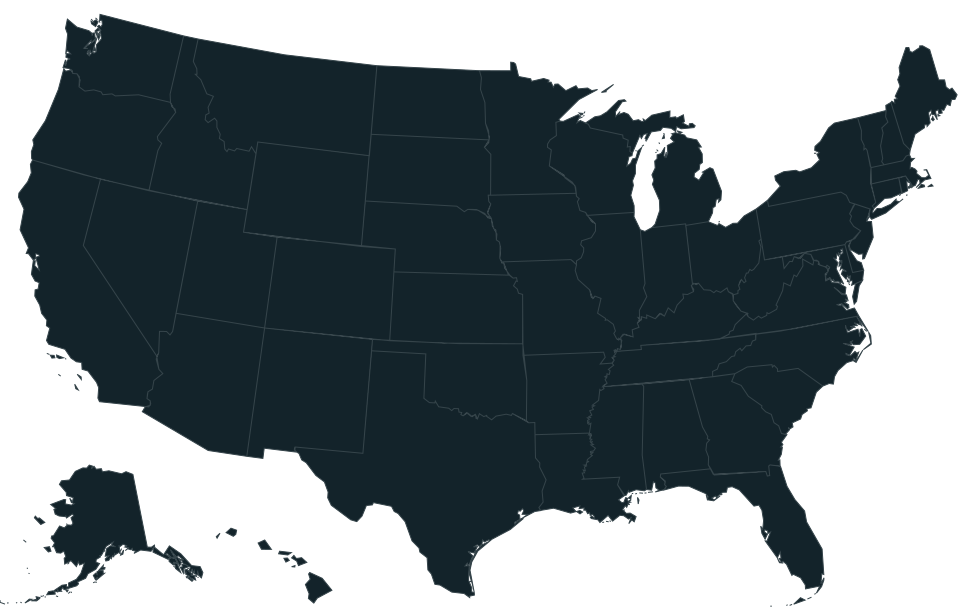
Where each case began · not a compliance heatmap
Florida to Georgia
Montgomery County, Alabama
Monroe County, Alabama
The Capitol; a federal sentencing statute
The clause is in force nationwide.
Prison-labor programs, sentences and pretrial detention are local records.
The clause alone contributes no county compliance score.
Doctrine RDN-001 → Amend. XIII, § 1 → a documented sentence, labor program or detention order → a documented local act or record → a scored institution and county, if the normalizer and human review support one.
| Relationship | Join key | Evidence needed |
|---|---|---|
| Root case | prov:us:amend-13:punishment-exception | Constitutional text and its drafting history |
| Doctrine node | doctrine:13th-amendment-exception-clause | Versioned rule synthesis and lineage |
| Local event | event_id + doctrine_ref | Official practice, actor, date, location, source |
| Scored institution | institution_id + event_id | Human-reviewed direction, weight and confidence |
Prison-labor program rules and pay; state constitutional amendments on the exception; sentencing and pretrial-detention orders.
Don't treat every sentence as servitude, or the clause as the cause of every incarceration trend without a source linking them.
Each ruling dropped a power, and each one says who walked away with it. Collect them across every doctrine: who holds what, and who got the better deal? Tap a relic to inspect its source.
1865 · Thirteenth Amendment ratified · The exception kept.
1905 · Clyatt v. United States · Punishable as servitude.
1911 · Bailey v. Alabama · Struck down.
1914 · United States v. Reynolds · Struck down.
Who won each ruling that built or limited this doctrine, from the sources on this page.
| Encounter | What was at stake | Taken by | What changed |
|---|---|---|---|
| 1865 · Thirteenth Amendment ratified | Abolition without exception | INSTITUTION | The exception kept. S7 ↗ |
| 1905 · Clyatt v. United States | Debt peonage | CITIZEN | Punishable as servitude. S3 ↗ |
| 1911 · Bailey v. Alabama | Labor by fraud presumption | CITIZEN | Struck down. S4 ↗ |
| 1914 · United States v. Reynolds | Labor for private sureties | CITIZEN | Struck down. S5 ↗ |
Citizen 3 · Institution 1 · a count of results, not a score
The old page scored the clause 63/99 with no balance and default-looking axes. This edition keeps those values as legacy and records only what opened sources show: the text, its origin, the debate and the peonage limits. No new overall Effect or gravity number is invented.
These are categories, not percentages or odds. A bar appears only when a number has a published method and a source.
| Field from old file | Value | Current treatment |
|---|---|---|
| Structure tier | IV · Institutional | Preserved as source taxonomy; evaluate against the new tier guide. |
| Power level | 63/99 · band 55–71 | Legacy editorial composite, uncalibrated. Not the same as current force or gravity. |
| Precedent force | 100 | Legacy component from the embedded record; needs source-by-source calibration. |
| Power balance | None carried | The old page drew no balance; none is invented here. |
| Gravity / current force / Effect | Not established | Pending a doctrine-specific rubric and review. |
| County CCS | Not established | Only local verified records may generate it. |
The earlier version had nine values. They're shown here for reference, not as current scores.
| Axis | Legacy input | Why review matters |
|---|---|---|
| Reach | 78 | Earlier editorial estimate |
| Severity | 78 | Earlier editorial estimate |
| Precedent force | 100 | Earlier editorial estimate |
| Institutional resistance | 50 | Old file default value |
| Profile divergence | 50 | Old file default value |
| Asymmetry | 50 | Old file default value |
| Evidentiary strength | 0 | The old file's value is 0; it reads as an unfilled default, not an assessment |
| Contestation | 60 | Earlier editorial estimate |
| Fog density | 75 | Earlier editorial estimate |
prov:us:amend-13:punishment-exception stores a specific battle and disposition. doctrine:13th-amendment-exception-clause stores the continuing rule, its triggers, exceptions, and current state. The Civic Operations Map references the doctrine from independently documented local acts. The shared keys preserve provenance without double-counting a national precedent in 3,000 counties.
The eleven-words framing, the Sumner and Howard exchange, the descent chain, the open 1986 correction and the 63/99 profile carried into the new information architecture.
doctrine-record/0.1 composed into the Card Standard 2.1 doctrine card in the Right to Counsel v0.2 look. Applied the old card's open correction (the 100-to-1 ratio is from 1986).
The old card's open correction is applied: the 100-to-1 crack ratio dates to the Anti-Drug Abuse Act of 1986 (USSC ↗), already a file on this site.
Convict leasing, Black Codes, vagrancy laws, the 1994 Crime Bill node and the state ballot measures removing the exception need opened sources.
Challenge a precise statement or propose a missing case, source, capability, or local event.