Pierson · the seed
A good-faith defense read into Section 1983. S4 ↗
Officials are shielded from damages unless a prior ruling clearly established that the conduct was unlawful, and courts may skip saying whether it was.
Pierson (1967) read a good-faith defense into Section 1983. Harlow (1982) made the test objective: was the right clearly established? Pearson (2009) let courts decide only that prong and skip whether the conduct was unconstitutional.
Root holding: Harlow, 457 U.S. 800 ↗ · seal Pearson (note) ↗ · This is an editorial doctrine synthesis, not the disposition of a new lawsuit.No legacy citizen-versus-Hydra split exists. If courts skip the constitutional question (Pearson), the law is never clearly established for the next case. None is invented here.
Who took each ruling that built or bounded this doctrine. A count of results, not a score; each row names what was at stake.
Harlow shields officials from civil damages. It does not bar relief that stops the conduct, and courts may still rule on the right.
Score the documented use of the power by an institution, never a person. A doctrine link alone colors no county.
Pearson lets a court dismiss on 'not clearly established' without deciding the right. If no court decides it, the next official in the same situation is immune too (Pearson (note) ↗).
Its legacy “power level” is preserved for comparison, not silently promoted to a calibrated map score.
Shields officials from paying damages unless a prior ruling clearly established that the same kind of conduct was unconstitutional.
Officials are shielded from civil damages unless their conduct violates clearly established rights of which a reasonable person would have known (Harlow v. Fitzgerald, 1982 ↗).
Reinforced: courts may skip the constitutional question (Pearson, 2009 ↗), and in 2026 the Court again granted immunity for want of a similar precedent (Zorn v. Linton ↗).
Old Qualified Immunity page: 62, band 54–70, ±8; uncalibrated. A legacy editorial composite, not a current force or gravity.
EARLIER PROFILE · NOT A CCS SCOREEach encounter's battle power for each side, read from that case's own scored file. Not yet scored, because no case file exists yet: Pierson v. Ray (1967), Zorn v. Linton (2026).
Gravity 92 · current force 92 · effect −84.9 · from case:harlow-v-fitzgerald ↗
Gravity 75 · current force 45 · effect −33.8 · from case:saucier-v-katz ↗
Gravity 90 · current force 90 · effect −81.0 · from case:pearson-v-callahan ↗
Gravity 58 · current force 65 · effect −37.4 · from case:jessop-v-fresno ↗
Use this to locate the controlling question. It cannot decide a particular case.
Immunity is a defense, not a finding that the conduct was lawful (Wex ↗).
A good-faith defense read into Section 1983. S4 ↗
The objective clearly-established test. S1 ↗
Courts must decide the right before immunity. S5 ↗
Courts may skip the right. S2 ↗
Theft of seized property; immunity; review denied. S6 ↗
Immunity upheld 6–3 for want of a similar precedent. S3 ↗
Each ability links to the opinion or record that creates or limits it. Loadout names are Civic³ labels, not court terms.
Officials are shielded from damages unless their conduct violates clearly established rights a reasonable person would have known.
Courts may decide which qualified-immunity prong to address first; Saucier's mandatory order abandoned.
6–3, unsigned: a Vermont trooper entitled to qualified immunity because no precedent placed similar conduct off limits. Secondary report.
Warren, C.J.: officers may raise good faith and probable cause as a defense to a § 1983 false-arrest claim.
The mandatory two-step order: decide the constitutional question first, then whether the right was clearly established.
Officers accused of stealing seized property received qualified immunity; the Supreme Court declined review in 2020.
The clearly-established test, judged by the law at the time of the conduct.
No matching source.
| Identity | RDN-002 · doctrine:qualified-immunity · judicial-immunity |
|---|---|
| Root | Harlow v. Fitzgerald, 457 U.S. 800 (1982) · Powell, J.; seed Pierson v. Ray (1967); seal Pearson v. Callahan (2009) |
| Actors | Officials who raise the defense and courts that grant or deny it; plaintiffs are protected persons, never rated. |
| Scope | National federal judge-made defense to damages under Section 1983 and against federal officers; states may provide their own remedies. |
| Map | Reference node only. Local scored records require their own actor, date, evidence, and method review. |
| Scoring | Legacy power level 62/99, no balance carried · provisional/unreconciled; no calculated current national Effect. |
Your challenge saves on this device. Export it to send it in for review. Nothing is posted publicly.
Harlow is the root case; Pierson is the seed and Pearson the seal. This page synthesizes the defense and its loop.
A new kind of violation has no prior case on point. The court grants immunity on that prong alone. No ruling on the right is made. The next case finds no prior case on point either.
Good-faith defense. S4 ↗
Clearly established test. S1 ↗
Decide the right first. S5 ↗
Skip the right. S2 ↗
Immunity for theft of seized property. S6 ↗
No similar precedent, immunity. S3 ↗
The exclusionary rule (RDN-009) keeps unlawfully seized evidence out; this doctrine decides whether the person searched can recover damages. Miranda's remedy was narrowed the same way (Vega, 2022).
Pierson added a defense. Harlow made it objective. Saucier required merits first; Pearson made that optional. Zorn (2026) applied the factual-match demand again.
The Civic Ops Map's own outline. Each pin is where a case began, read from that case's own file; its color shows who took the encounter. Not on the map yet, because no case file records a location: Pierson v. Ray (1967), Zorn v. Linton (2026).
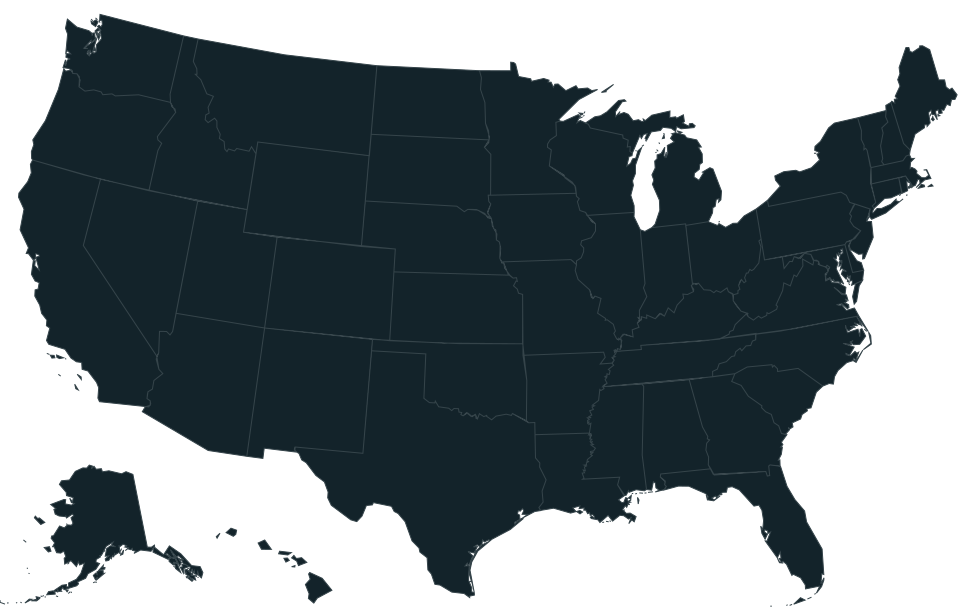
Where each case began · not a compliance heatmap
Damages suit against White House aides
Presidio Army Base; N.D. Cal.
Central Utah; Tenth Circuit
City of Fresno; E.D. Cal.
Harlow and Pearson bind every federal court hearing a damages claim against an official.
Each grant or denial is a documented order in a named suit.
The doctrine link alone contributes no county compliance score.
Doctrine RDN-002 → Harlow / Pearson holdings → a documented immunity ruling in a suit against a local officer → a documented local act or record → a scored institution and county, if the normalizer and human review support one.
| Relationship | Join key | Evidence needed |
|---|---|---|
| Root case | case:harlow-v-fitzgerald | U.S. Reports holding and status |
| Doctrine node | doctrine:qualified-immunity | Versioned rule synthesis and lineage |
| Local event | event_id + doctrine_ref | Official practice, actor, date, location, source |
| Scored institution | institution_id + event_id | Human-reviewed direction, weight and confidence |
Immunity rulings with the prong decided; whether the court reached the constitutional question; the underlying conduct as found.
Don't treat a grant of immunity as a finding the conduct was lawful, or a denial as a finding of liability.
Each ruling dropped a power, and each one says who walked away with it. Collect them across every doctrine: who holds what, and who got the better deal? Tap a relic to inspect its source.
1967 · Pierson v. Ray · Good-faith defense recognized.
1982 · Harlow v. Fitzgerald · Replaced by the objective test.
2001 · Saucier v. Katz · Merits first required (later abandoned).
2009 · Pearson v. Callahan · Made optional.
2026 · Zorn v. Linton · Immunity granted 6–3.
Who won each ruling that built or limited this doctrine, from the sources on this page.
| Encounter | What was at stake | Taken by | What changed |
|---|---|---|---|
| 1967 · Pierson v. Ray | Damages for a false arrest | INSTITUTION | Good-faith defense recognized. S4 ↗ |
| 1982 · Harlow v. Fitzgerald | Inquiry into an official's bad faith | INSTITUTION | Replaced by the objective test. S1 ↗ |
| 2001 · Saucier v. Katz | A ruling on the right in every case | CITIZEN | Merits first required (later abandoned). S5 ↗ |
| 2009 · Pearson v. Callahan | A ruling on the right in every case | INSTITUTION | Made optional. S2 ↗ |
| 2026 · Zorn v. Linton | Damages for force against a protester | INSTITUTION | Immunity granted 6–3. S3 ↗ |
Citizen 1 · Institution 4 · a count of results, not a score
The old card scored the shield 62/99 with no balance and placeholder-looking axes (evidentiary strength 0). This edition keeps those values as legacy and separates the test, the skip option and the remedies the shield does not reach. No new overall Effect or gravity number is invented.
These are categories, not percentages or odds. A bar appears only when a number has a published method and a source.
| Field from old file | Value | Current treatment |
|---|---|---|
| Structure tier | III · Regional | Preserved as source taxonomy; evaluate against the new tier guide. |
| Power level | 62/99 · band 54–70 | Legacy editorial composite, uncalibrated. Not the same as current force or gravity. |
| Precedent force | 95 | Legacy component from the embedded record; needs source-by-source calibration. |
| Power balance | None carried | The old page drew no balance; none is invented here. |
| Gravity / current force / Effect | Not established | Pending a doctrine-specific rubric and review. |
| County CCS | Not established | Only local verified records may generate it. |
The earlier version had nine values. They're shown here for reference, not as current scores.
| Axis | Legacy input | Why review matters |
|---|---|---|
| Reach | 78 | Earlier editorial estimate |
| Severity | 78 | Earlier editorial estimate |
| Precedent force | 95 | Earlier editorial estimate |
| Institutional resistance | 50 | Old file default value |
| Profile divergence | 50 | Old file default value |
| Asymmetry | 50 | Old file default value |
| Evidentiary strength | 0 | The old file's value is 0; it reads as an unfilled default, not an assessment |
| Contestation | 60 | Earlier editorial estimate |
| Fog density | 75 | Earlier editorial estimate |
case:harlow-v-fitzgerald stores a specific battle and disposition. doctrine:qualified-immunity stores the continuing rule, its triggers, exceptions, and current state. The Civic Operations Map references the doctrine from independently documented local acts. The shared keys preserve provenance without double-counting a national precedent in 3,000 counties.
The §1983 promise, the self-sealing loop, the chain to Pearson, the 62/99 profile and its axis values carried into the new information architecture.
doctrine-record/0.1 composed into the Card Standard 2.1 doctrine card in the Right to Counsel v0.2 look. Added Zorn v. Linton (23 March 2026).
On 23 March 2026 the Court, 6–3, reversed a denial of immunity because no precedent placed similar conduct off limits (Daily Signal report ↗). The 'no reform in 47 states' line is held until sourced.
The 'no reform in 47 states' index line, Malley v. Briggs' 'plainly incompetent' phrase and a primary copy of Zorn v. Linton need opened sources.
Challenge a precise statement or propose a missing case, source, capability, or local event.